

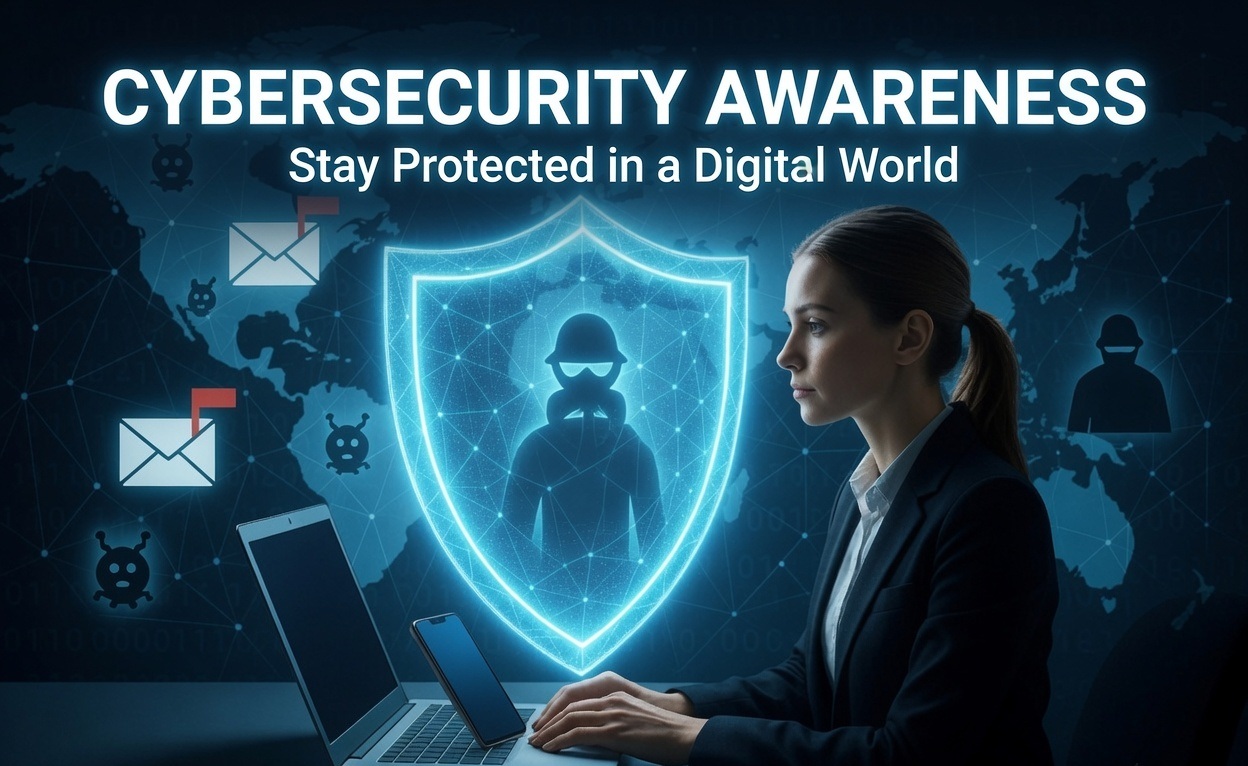
In today's interconnected world, our lives revolve around the internet—banking, shopping, working, and socializing all happen online. But with this convenience comes risk. Cyber threats are evolving rapidly, and the costs are staggering. Cybercrime is projected to cost businesses up to $10.5 trillion annually in the near term, with potential escalation beyond that in coming years.
Cybersecurity awareness is not just for IT professionals—it's essential for everyone. Simple habits and knowledge can dramatically reduce your vulnerability to attacks. This article outlines why it matters and provides practical steps to stay safe.
Why Cybersecurity Awareness Matters More Than Ever
Cyberattacks don't discriminate. Individuals face identity theft, financial loss, and privacy breaches, while businesses and governments deal with ransomware, data leaks, and operational disruptions. AI is accelerating threats, with data leaks tied to generative AI and advancing adversarial tools emerging as top concerns.
Many breaches stem from human error—clicking suspicious links, using weak passwords, or falling for social engineering. Awareness training and consistent habits turn the weakest link (people) into a strong line of defense. Regular education helps organizations and individuals adapt to new risks like supply chain vulnerabilities and insider threats.
Common Cyber Threats You Should Know
Understanding the enemy is the first step in defense. Here are some prevalent threats:
- **Phishing and Social Engineering**: Attackers impersonate trusted entities via email, text, or calls to trick you into revealing credentials or downloading malware. These remain highly effective because they exploit trust and urgency.
- **Malware and Ransomware**: Malicious software that can steal data, encrypt files for ransom, or damage systems. Often delivered through infected attachments or downloads.
- **Data Breaches and Identity Theft**: When hackers access databases, your personal information can be sold on the dark web, leading to fraudulent accounts or long-term fraud.
- **Denial-of-Service (DoS) Attacks**: Overwhelming systems to make services unavailable, often targeting businesses or critical infrastructure.
- **Emerging Risks**: AI-powered attacks, supply chain compromises, and credential-stuffing using leaked passwords (as seen in recent campaigns targeting devices worldwide).
Essential Best Practices for Everyday Protection
You don't need advanced technical skills to improve your security significantly. Follow these "cyber hygiene" fundamentals recommended by experts like CISA:
1. **Use Strong, Unique Passwords**
Avoid common choices like "password123." Create long, complex passwords (at least 12-16 characters) with a mix of letters, numbers, and symbols. Use a reputable password manager to generate and store them securely. Never reuse the same password across multiple accounts.
2. **Enable Multi-Factor Authentication (MFA)**
Add an extra layer of protection. Even if a password is compromised, attackers need a second factor (like a code sent to your phone or an authenticator app). Turn it on for email, banking, and social media.
3. **Keep Software and Devices Updated**
Updates patch vulnerabilities. Enable automatic updates for your operating system, apps, browsers, and antivirus software. Outdated systems are prime targets.
4. **Be Vigilant Against Phishing**
Think before you click. Hover over links to check the real URL. Verify unexpected requests for information, especially those creating urgency or offering deals that seem too good to be true. Avoid downloading attachments from unknown sources.
5. **Secure Your Networks and Devices**
Use firewalls, reputable antivirus/anti-malware tools, and avoid public Wi-Fi for sensitive tasks (or use a VPN). Back up important data regularly to an encrypted external drive or secure cloud service.
6. **Protect Personal Information**
Share only what's necessary online. Review privacy settings on social media. Be cautious with smart devices (IoT) that connect to your network.
7. **Stay Informed and Train Regularly**
For organizations, implement ongoing awareness programs with simulations, quizzes, and updates rather than one-off sessions. Individuals can follow reliable sources like CISA or cybersecurity blogs for the latest threats.
What to Do If Something Goes Wrong
Even with precautions, incidents happen. If you suspect a breach:
- Change passwords immediately.
- Monitor accounts for unusual activity.
- Report to your bank or relevant authorities.
- For businesses, follow incident response plans and notify affected parties as required by law.
Building a Culture of Cybersecurity
Cybersecurity is a shared responsibility. Families should discuss safe online habits with children. Employers should foster a culture where reporting suspicious activity is encouraged without fear of blame. Governments and organizations promote initiatives like Cybersecurity Awareness Month every October to highlight these issues.
Conclusion: Small Actions, Big Impact
In an era of rapid technological change, staying one step ahead of cybercriminals requires vigilance, education, and proactive habits. By adopting strong passwords, MFA, regular updates, and skepticism toward unsolicited requests, you can protect yourself, your family, and your organization.
Cybersecurity awareness isn't about paranoia—it's about empowerment. Start implementing these practices today. Your digital life—and peace of mind—depend on it.