

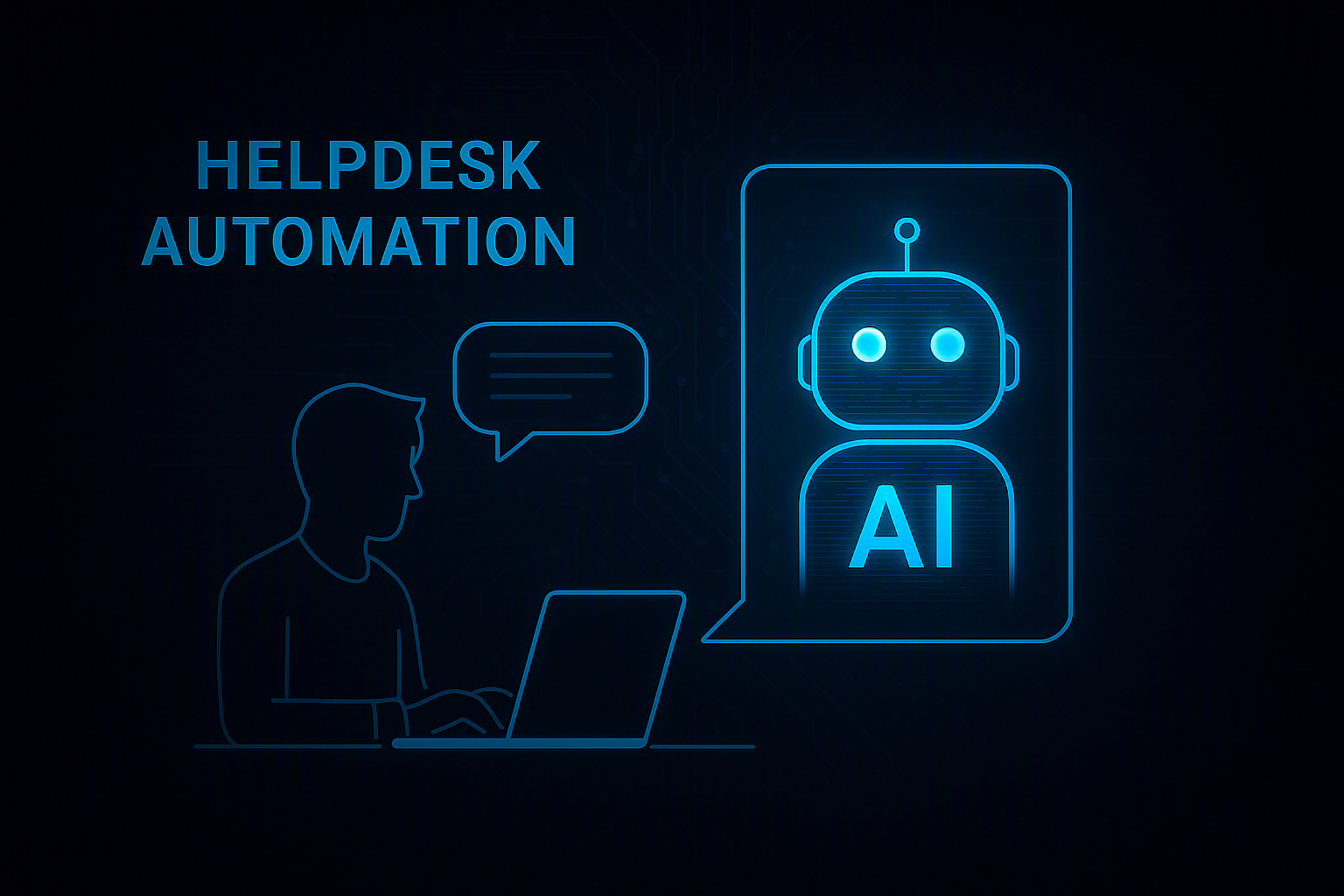
Helpdesk automation is revolutionizing IT support by leveraging artificial intelligence (AI) and advanced workflows to streamline operations. Traditional IT support models often struggle with high ticket volumes, slow response times, and repetitive tasks. Automation addresses these challenges, enabling organizations to deliver faster and more efficient support.
One of the most significant benefits of helpdesk automation is ticket management. Automated systems can categorize, prioritize, and assign tickets based on predefined rules. This reduces the time required for manual triage and ensures that critical issues are addressed promptly.
AI-powered chatbots are another key component of helpdesk automation. These virtual assistants can handle common user queries, such as password resets or software installation instructions. By providing instant responses, chatbots improve user satisfaction and free up IT staff to focus on more complex issues.
Self-service portals are also becoming increasingly popular. These platforms allow users to search for solutions, submit requests, and track ticket status without direct interaction with support staff. Knowledge bases and FAQs empower users to resolve issues independently, reducing the workload on IT teams.
Automation also improves incident resolution times. For example, automated workflows can trigger actions such as restarting services, clearing caches, or applying patches. This eliminates the need for manual intervention and accelerates problem resolution.
Integration with other IT systems is another advantage. Helpdesk platforms can integrate with monitoring tools, asset management systems, and security solutions. This provides a unified view of the IT environment and enables more efficient troubleshooting.
However, implementing helpdesk automation requires careful planning. Organizations must ensure that their processes are well-defined and that automation rules are properly configured. Poor implementation can lead to incorrect ticket assignments or missed issues.
Employee acceptance is also important. While automation enhances efficiency, it should not replace human interaction entirely. Complex issues and sensitive situations still require human expertise and empathy.
Data analytics is a valuable benefit of helpdesk automation. By analyzing ticket data, organizations can identify trends, recurring issues, and areas for improvement. This data-driven approach helps optimize IT support operations and improve overall service quality.
In conclusion, helpdesk automation is transforming IT support by improving efficiency, reducing workload, and enhancing user experience. By leveraging AI and automation tools, organizations can deliver faster and more reliable support while optimizing their resources.