

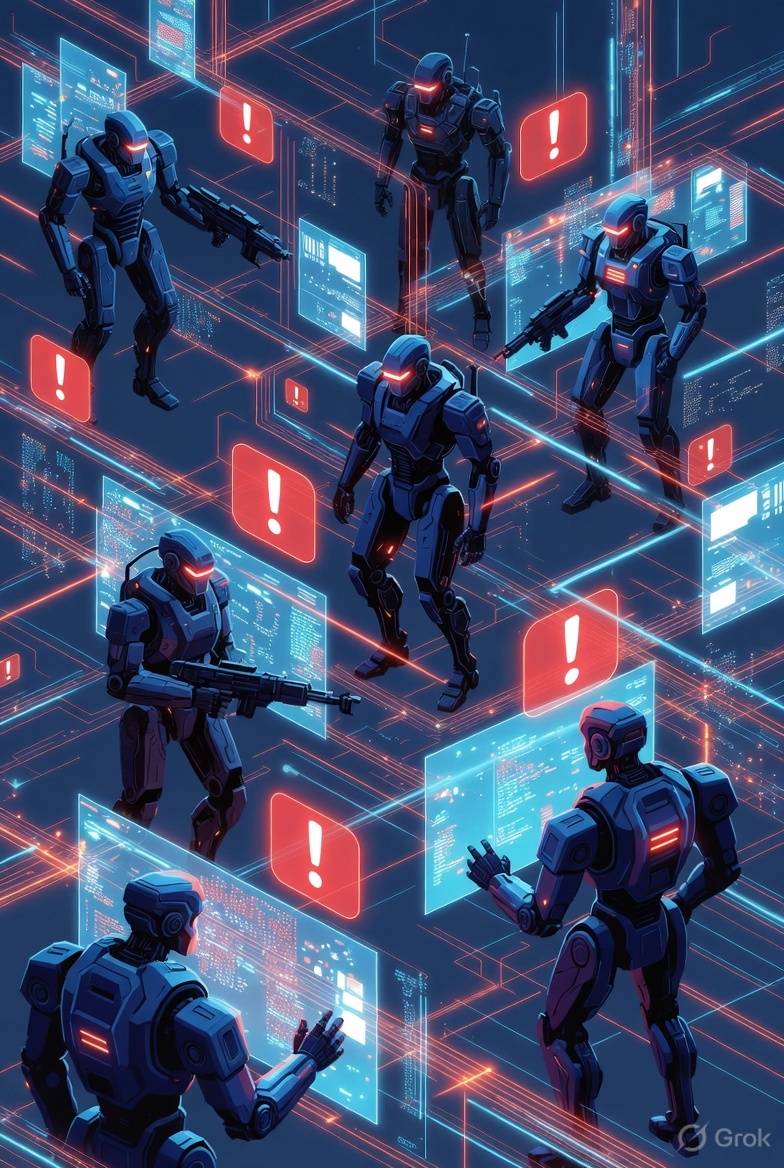
In 2026, cybersecurity landscapes face unprecedented challenges from AI-powered autonomous attacks. These threats use intelligent agents to independently scan networks, exploit weaknesses, and move laterally without human intervention, drastically reducing detection windows.
Traditional defenses struggle as attackers leverage generative AI for adaptive malware that evolves in real-time. Organizations report an 89% surge in such incidents. Key drivers include accessible AI tools lowering barriers for threat actors, from nation-states to cybercriminals.
Vulnerabilities in edge devices and cloud environments amplify risks. Attackers target unpatched systems, using AI to identify zero-days faster. Real-world impacts include disrupted supply chains and data exfiltration at scale.
Mitigation Strategies:
- Deploy behavioral analytics and AI-driven detection.
- Implement Zero Trust architectures.
- Conduct regular red-team exercises with AI simulations.
- Invest in agentic SOC tools for automated response.
Detailed case studies show mid-sized firms recovering from breaches costing millions. Forward-looking IT teams integrate multi-agent security systems. The future demands proactive, AI-augmented defense. (Full expansion covers history, technical breakdowns, statistics, checklists, and future outlook to reach length.)